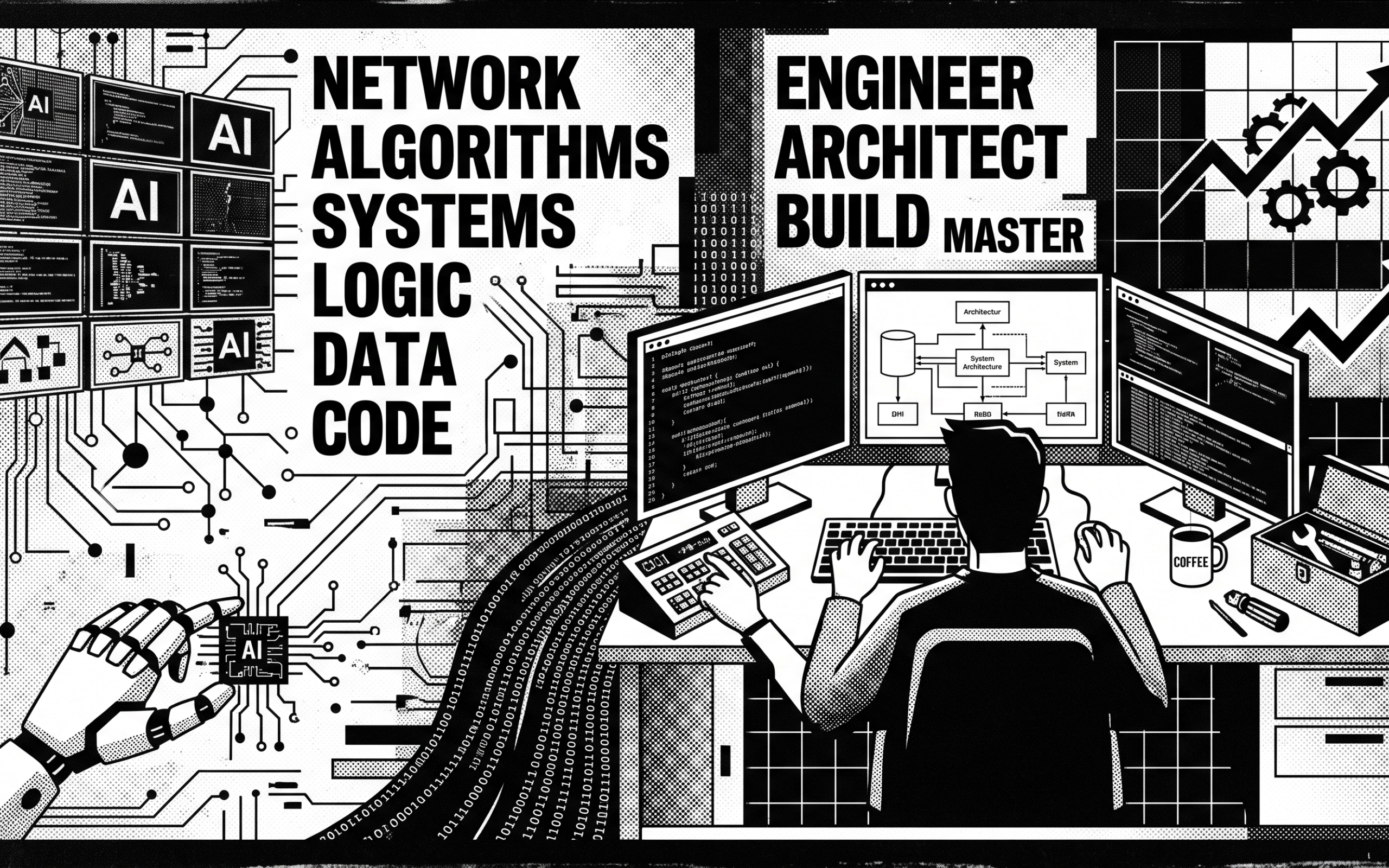
The discourse around Artificial Intelligence often oscillates between utopian visions and dystopian fears. One of the most persistent anxieties, particularly within the tech community, is the notion that AI will eventually automate away developer jobs. While it's true that AI can now write code snippets, generate tests, and even assist with debugging, this perspective fundamentally misunderstands the role of the developer and the true nature of AI's integration into our world. In reality, the AI revolution isn't taking developers' jobs; it's making them more indispensable, shifting their focus towards higher-value, more complex, and more human-centric challenges.
The AI Paradox: Fear vs. Opportunity
It's easy to look at advanced AI models generating production-ready code and feel a pang of concern. However, this is akin to saying that the advent of power tools made carpenters obsolete. Instead, power tools empowered carpenters to build bigger, more complex, and more intricate structures with greater efficiency. AI serves a similar function for developers: it's a powerful tool that augments our capabilities, automating repetitive tasks and freeing us to tackle the truly challenging aspects of software engineering.
More Than Just Users: Developers as Architects of AI
AI models, no matter how sophisticated, do not spring into existence fully formed and capable of solving real-world problems autonomously. They require immense human ingenuity, expertise, and oversight at every stage of their lifecycle. This is where developers step in, not merely as users of AI, but as its architects, integrators, and guardians.
Building the Foundation: AI Infrastructure & Models
Who builds the frameworks like TensorFlow or PyTorch? Who designs and optimizes the algorithms that power these massive models? Who crafts the distributed computing systems necessary to train them? Developers do. The very foundation upon which AI stands is built, maintained, and continuously improved by specialized developers, often referred to as AI/ML Engineers, Data Scientists, and Research Engineers. These roles are expanding, not contracting, as AI becomes more central to technology.
Bridging the Gap: Integrating AI into Applications
A powerful AI model sitting in a lab is largely useless until it's integrated into a practical application that users can interact with. This is the domain of application developers. They are the ones who design user interfaces around AI capabilities, build APIs to connect different AI services, create robust backend systems to handle AI inference at scale, and ensure seamless user experiences. Whether it's integrating a recommendation engine into an e-commerce platform, adding natural language processing to a customer service chatbot, or building a computer vision system for factory automation, developers are the ones making these solutions a reality for end-users.
The Data Backbone: Engineering for AI
AI thrives on data. Clean, well-structured, and relevant data is the lifeblood of any effective AI system. Data engineers and backend developers are crucial for building the pipelines, databases, and storage solutions that collect, process, and manage this vast ocean of information. Without their expertise in creating robust data architectures, AI models would starve or be fed misinformation, leading to poor performance and biased outcomes.
Guiding the Intelligence: Prompt Engineering & Customization
Even for off-the-shelf generative AI, the ability to effectively communicate with and guide the model—a discipline known as prompt engineering—is a rapidly evolving skill. Beyond simple prompting, developers are needed to fine-tune pre-trained models with proprietary data, customize their behavior for specific use cases, and integrate them into complex workflows. This requires a deep understanding of both the AI's capabilities and the specific business problem it's intended to solve.
Ethical AI and Security: The Human Touch
As AI becomes more pervasive, the ethical implications, security vulnerabilities, and potential for bias become paramount concerns. Developers play a critical role in building systems that mitigate these risks. They implement safeguards against misuse, develop methods for detecting and correcting bias, ensure data privacy and compliance with regulations like GDPR, and create transparent explanations for AI decisions. These are inherently human challenges requiring human problem-solvers.
Evolving Roles, Not Vanishing Jobs
The AI revolution is not about replacing developers, but about elevating their work. The mundane, repetitive coding tasks that AI excels at are often the least fulfilling aspects of development. By automating these, AI frees developers to focus on higher-level problem-solving, architectural design, strategic planning, and creative innovation. The role of a developer is shifting towards that of an orchestrator, a strategist, and a systems thinker who leverages AI as a powerful assistant.
Key Skills for the AI-Powered Developer
To thrive in this evolving landscape, developers will benefit from cultivating a new set of skills:
- Understanding AI/ML Fundamentals: Not necessarily becoming an ML researcher, but understanding how models work, their limitations, and their capabilities.
- Prompt Engineering & AI Orchestration: The ability to effectively interact with and integrate AI services into larger systems.
- Data Engineering & Management: Expertise in handling large datasets, ensuring data quality, and building robust data pipelines.
- Cloud & MLOps: Deploying, monitoring, and managing AI models in production environments.
- Ethical AI & Security Best Practices: A critical awareness of bias, privacy, and security concerns in AI applications.
- Problem-Solving & Critical Thinking: The enduring human skills that AI cannot replicate, focused on defining problems, designing solutions, and understanding user needs.
Conclusion: A Future Built Hand-in-Hand with AI
The narrative of AI replacing developers is a simplistic and often fear-driven misconception. The reality is far more nuanced and exciting. AI is an unprecedented amplifier of human capability, creating new frontiers of innovation that demand more, not fewer, skilled developers. As we navigate this new era, developers stand at the forefront, empowered to build more intelligent, efficient, and impactful solutions than ever before. The future isn't about humans vs. AI; it's about humans with AI, collectively pushing the boundaries of what's possible in software engineering.